← All posts·By Jason Donovan
Every few weeks the same question lands in my inbox: Rwanda or Uganda for the gorillas?
Let me pass on my experience of both, and give you the answer most people selling gorilla treks will not, because most of them only sell one of the two.
Rwanda and Uganda are not the same trip at different prices. They are different treks.
The short answer
Rwanda’s Volcanoes National Park is a mountain you can reach from the airport before lunch. Uganda’s Bwindi Impenetrable National Park is a forest that takes a day to get to from Kigali or Entebbe, depending on which direction you are coming from. Rwanda costs more and asks less of you. Uganda costs less and asks more. Both hand you one hour with a habituated family, at a minimum of seven metres distance, and neither will let you use a flash.
If you want the photographs, read the section below on Uganda’s habituation experience before you book anything. It is the single best four hours of gorilla photography available anywhere, and it exists in only one of the two countries.
Rwanda: bamboo, altitude and a two-hour drive
Set off in the morning from Kigali and drive north on good tarmac for about two and a half hours to Musanze. Next morning you are at Kinigi for the briefing and on the trek by eight.
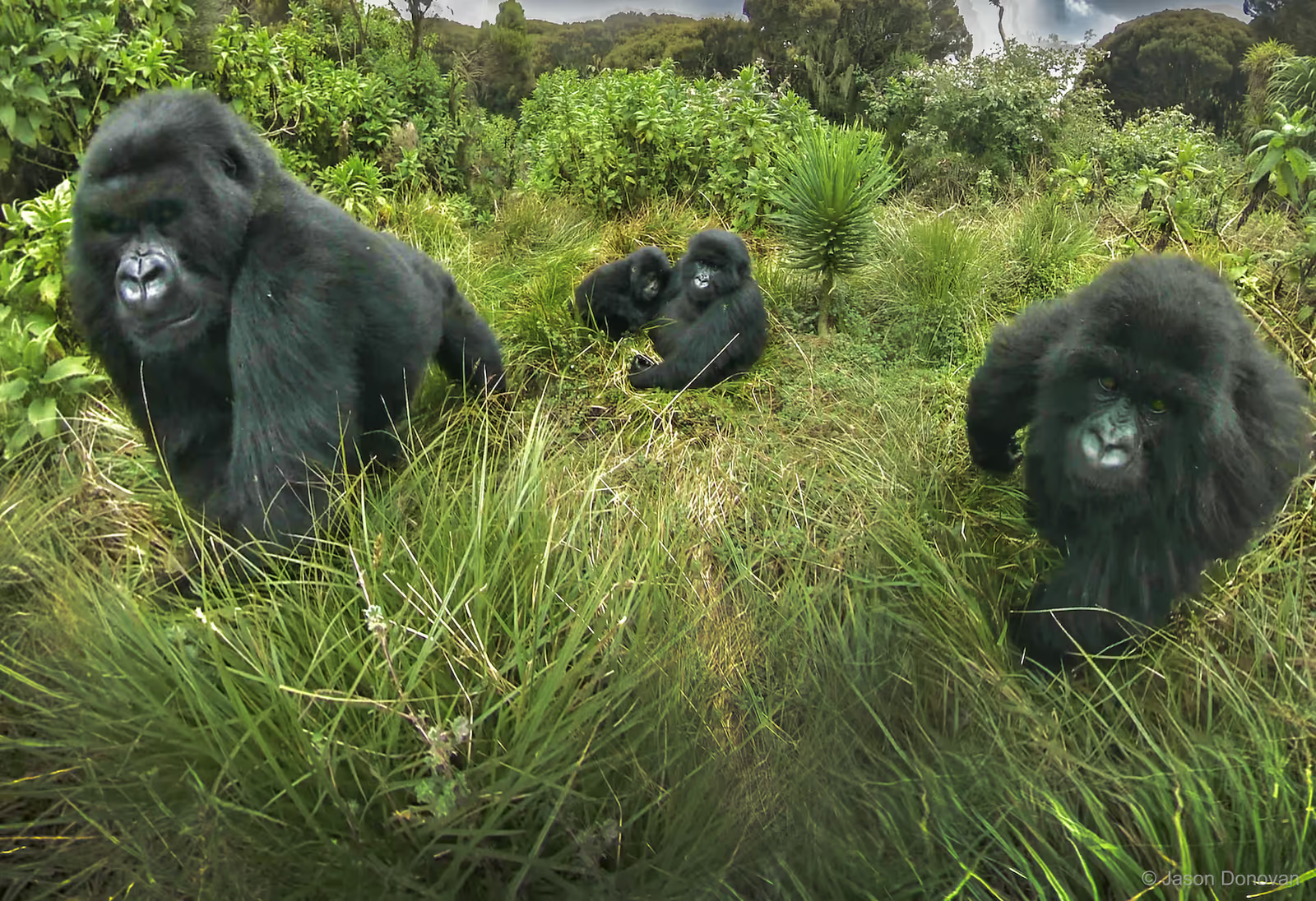
The landscape surprises people. You pass farms and eucalyptus, a low stone wall marks the park boundary, and then you are inside bamboo and hagenia on the slopes of the Virungas. The altitude sits between roughly 2,500 and 3,000 metres, so the walking is slower than the distance suggests. Most groups find their family within one to three hours.
Rwanda has about a dozen habituated families. The briefing at Kinigi is a well organised experience, with delicious coffee, and on a busy morning there may be a hundred trekkers being sorted into groups of eight. It is efficient and it is friendly, but it does not feel wild. The forest does, once you are in it.
Uganda: a forest that makes you work
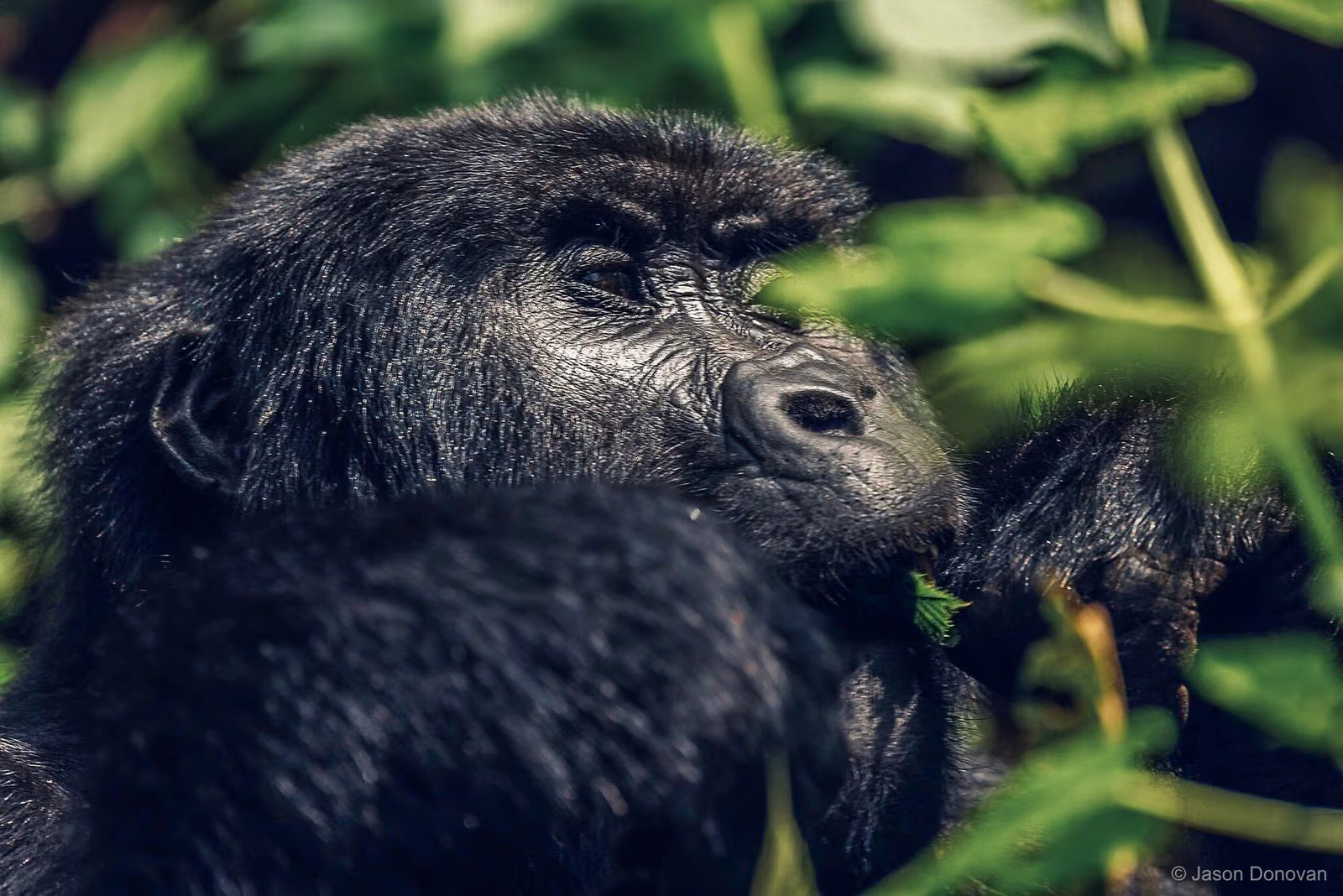
Bwindi is a different proposition. You either take a full day’s drive from Entebbe, eight hours or more, or a light aircraft to Kihihi or Kisoro, or you drive from Kigali across the border. Then you trek from one of four trailheads: Buhoma, Ruhija, Rushaga or Nkuringo. Each has its own character and its own families, around twenty in Bwindi and one more in Mgahinga.
"Impenetrable" is not a marketing word. The understory is thick, the ground is steep and often slick, and there is a reason every Ugandan trek begins with a conversation about whether you want a porter. I always recommend you take the porter.
The walk can be an hour or it can be six. That uncertainty is the price of the wilderness, and it is also what people remember.
What a permit actually buys
| Feature | Rwanda | Uganda |
|---|---|---|
| Park | Volcanoes | Bwindi, Mgahinga |
| Permit, foreign non-resident | US$1,500 | US$800 |
| Low season | — | US$600 in April, May and November |
| Time with the gorillas | 1 hour | 1 hour |
| Longer option | Not offered | 4 hours, habituation, US$1,500 |
| Group size | 8 | 8 |
| Minimum age | 15 | 15 |
| Getting there | About 2.5 hours from Kigali | A day from Entebbe, a flight, or a day from Kigali |
Those are the published figures at the start of November 2026. Prices move, so confirm the current rate with the park authority or your operator before you pay anything.
The gap between US$800 and US$1,500 buys you a much shorter transfer and a country that is easier to travel in. It does not buy you a better gorilla.
The rules that decide your photographs
Both countries run the same core rules, and they matter more to a photographer than to anyone else.
Here they are: seven metres minimum. One hour, timed from the moment your guide says the clock has started. No flash, ever. Eight visitors per family. No eating or drinking near the gorillas. Stay low if a silverback comes close, and do not run.
Seven metres is the constraint that shapes everything. It is close enough for most long lenses (I prefer a 24-120mm lens, but many like a 70-200mm). It is not really close enough for a phone, which is why phone photographs of gorillas so often end up as a dark green rectangle with a suggestion of fur in the middle.
The hour is the other constraint. It goes quickly, so I suggest you set up your camera before you arrive: high ISO, because it can be dark in the misty mountains, wide aperture, single-point continuous eye autofocus, and definitely silent shutter if you have it.
Light, and why the two forests differ
In Bwindi you are under a canopy. Light arrives in shafts and patches, and the meter will lie to you. Expect to live between ISO 3200 and 6400, and expect half your frames to be about a stop dark until you learn to trust your own eye over the camera’s. The reward is atmosphere: the forest itself is worth photographing, with vines, moss and the green gloom behind the family.
Volcanoes National Park in Rwanda is more open in places, particularly in the bamboo, where light reaches the ground and the gorillas are often on gentler slopes. It is easier. It is also, photographically, a little less interesting, because easy light flattens everything, although when there is a mist in the air it is sublime.
What to carry
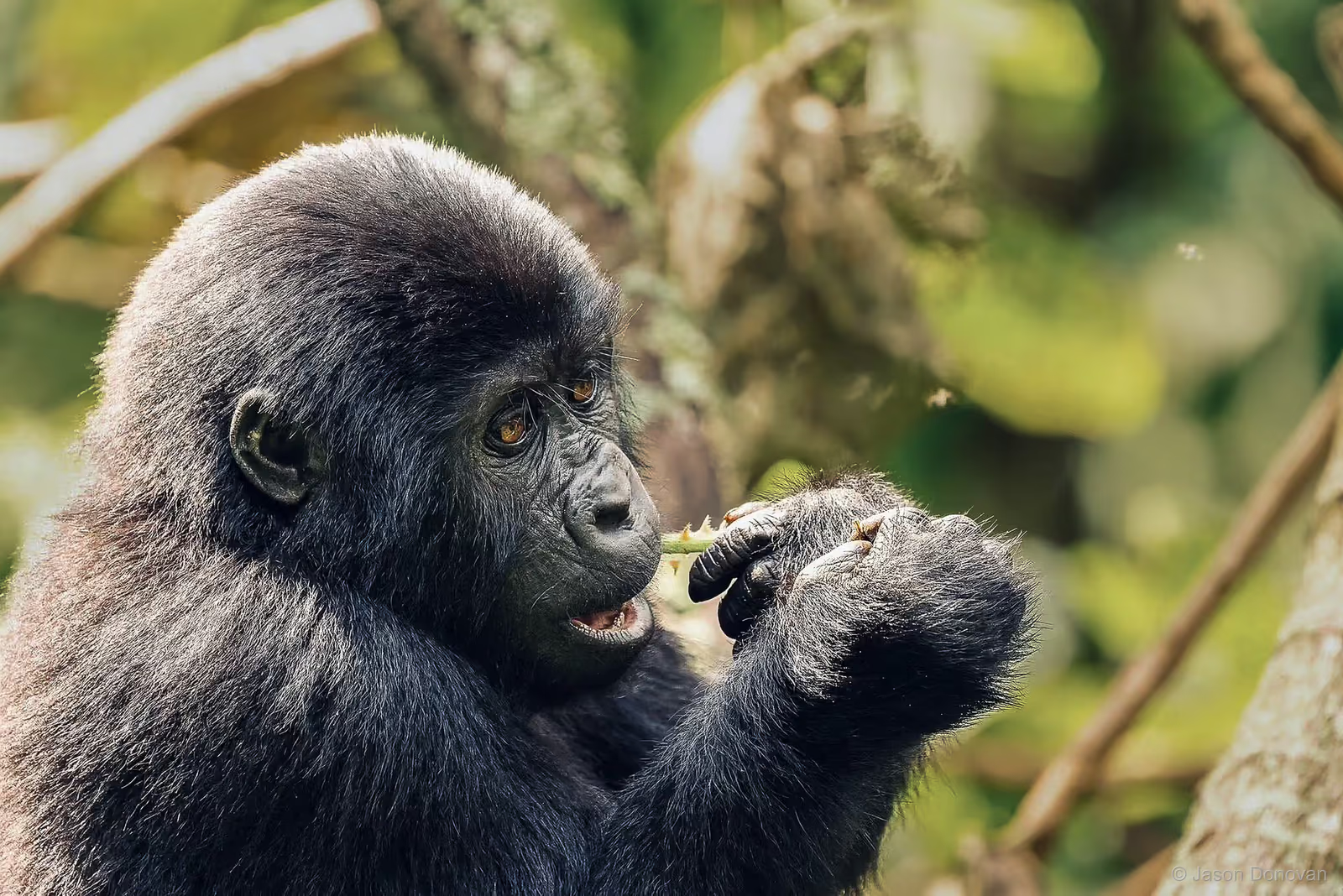
My main body is a Nikon Z6 with a 24-120mm lens, and at seven metres it is ideal. A 70-200mm will also do a great job in Rwanda’s bamboo. A second body with a fast portrait lens could be fun, or go longer for close-up eye and feature shots.
Bring a rain cover, lens cloths, and spare batteries kept in a pocket rather than the bag. Cold and damp eat batteries, and there is nowhere to plug anything in. Leave the tripod behind. It will restrict you, but if you really need support, bring a monopod.
Where Uganda wins
On price, obviously. But also on the experience of the forest, on the number of trailheads, and on the habituation experience in Rushaga, where four hours with a semi-habituated family alongside researchers is allowed instead of one. That permit costs US$1,500 and is rising to US$1,800 from January 2027. If you are serious about photographing gorillas, it is worth more than any lens you could buy for the same money.
Uganda also combines well with other excursions. Kibale for chimpanzees, Queen Elizabeth for savannah, Lake Bunyonyi for a few quiet days.
Where Rwanda wins
Time. Rwanda is a small country with good roads, and you can land on Friday and be with gorillas on Sunday. Add Akagera for the Big Five, Nyungwe for the canopy walk, chimps and the birds, and you have a full week without a single long transfer.
It is also the easier country for a first visit to Africa: clean, organised, simple to get around, and with a genocide memorial in Kigali that everyone should see once. Rwanda has also run a discounted permit for visitors who add nights in Akagera or Nyungwe, so it is worth asking about if your dates are flexible.
The trip I would actually plan
If you can spare ten days, do both. Fly into Kigali, trek Volcanoes, then cross at Cyanika near Musanze into Uganda and drive to Bwindi for a second trek, and fly home from Entebbe. Two treks means two chances. Gorilla photography is a lottery, and the second ticket is worth more than a better hotel.
I guide in Rwanda, so that is where I have more experience. If you are weighing the two countries, send me your dates and what you want to photograph, and I will tell you honestly which one fits.
Planning a gorilla trek?
Send me your dates and what you want to photograph, whether you are set on Rwanda or still weighing up Uganda.