← All posts·By Jason Donovan·
After a tour is booked, the question I am asked most is which lenses to bring. The short answer: the longest telephoto zoom you can hold comfortably for a few hours, a second camera body with a shorter zoom, and something to rest the long lens on.
This guide explains why, using Akagera National Park as the example. The same thinking works for almost any safari.
The lens that does most of the work
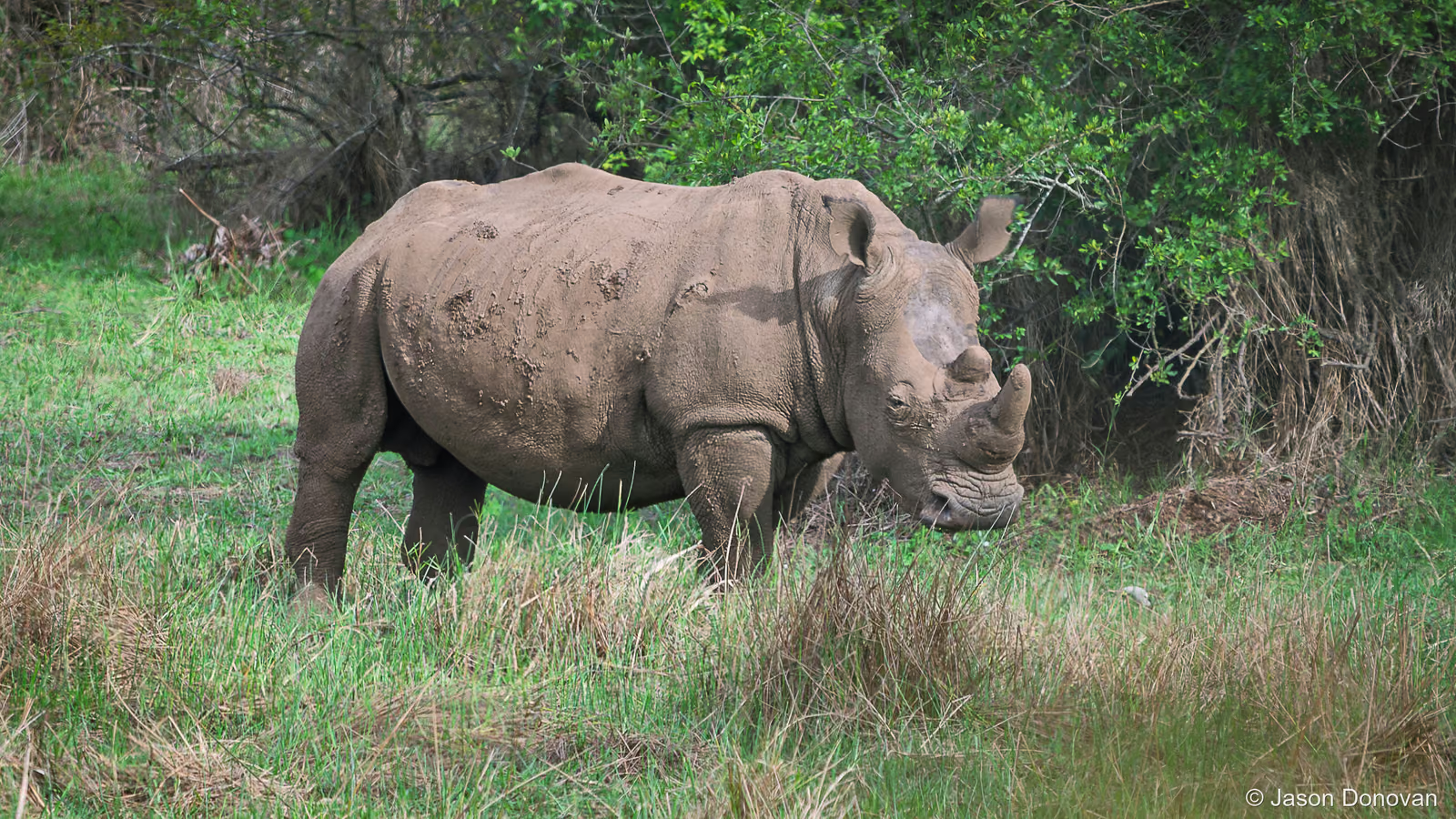
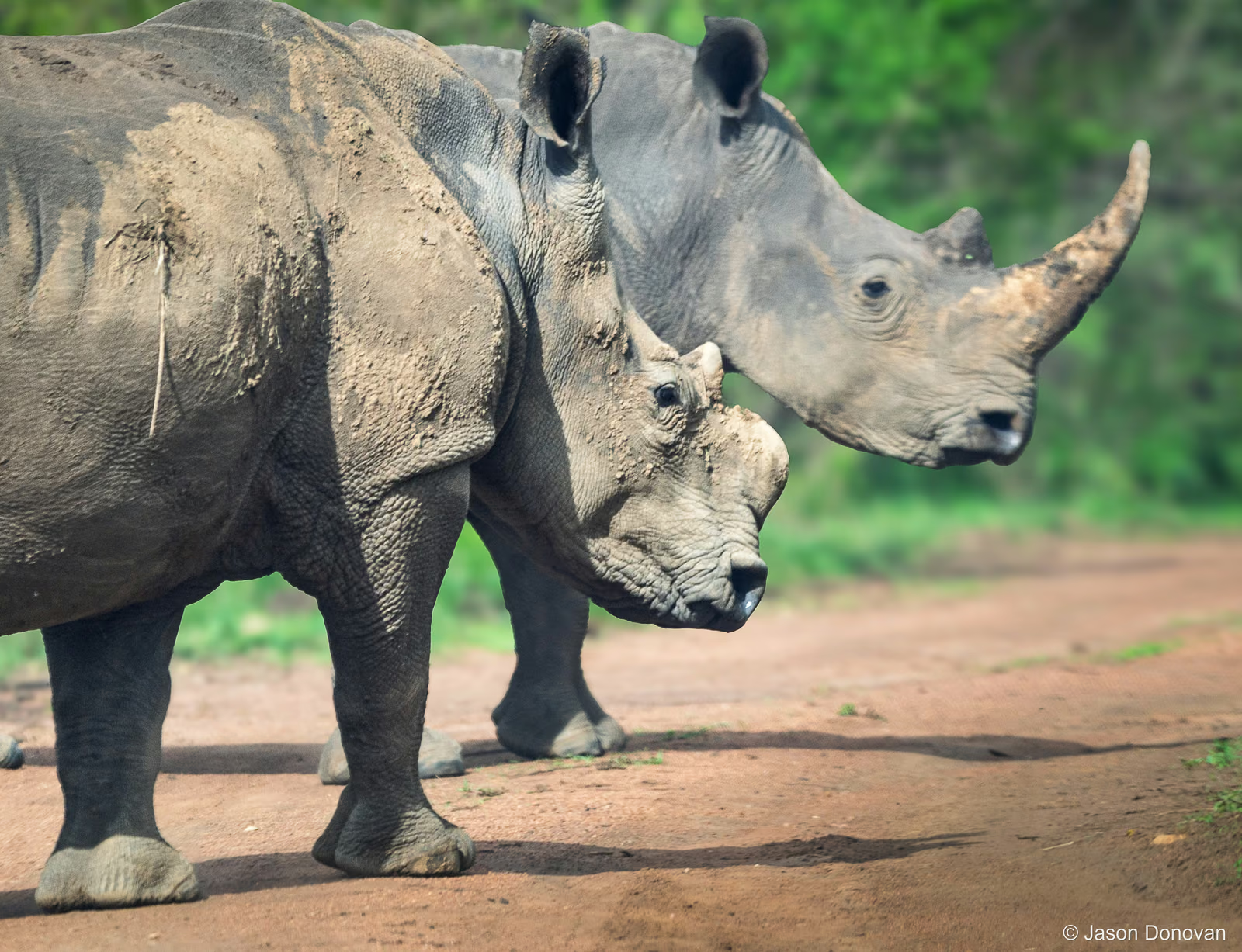
Game drives in Akagera stay on the park's tracks, so you cannot always drive closer to an animal. Many sightings are between about 20 and 100 metres away. At those distances a 100–400mm, 150–600mm or 200–600mm zoom (or the equivalent for your camera system) covers nearly everything: a lion resting in the grass, a rhino crossing the track, a fish eagle on a dead tree.
A zoom matters more on safari than almost anywhere else. An elephant can walk from 80 metres to 15 metres in a minute, and with a zoom you can go from the animal in its landscape to a close portrait without changing lenses and without missing the moment.
Lenses at a glance
A quick comparison of the lenses guests most often bring to Akagera.
| Lens | Best for | Trade-off |
|---|---|---|
| 100–400mm zoom | Most mammals, birds at closer range, handheld shooting | Not always long enough for small birds |
| 150–600mm or 200–600mm zoom | Birds, shy animals, tight portraits | Heavier; needs support for long sessions |
| 500mm or 600mm prime | Birds and the sharpest results in poor light | Heavy, expensive, fixed framing |
| 70–200mm | Close animals, the boat safari, the gorillas | Too short for most birds |
| 24–70mm or 24–105mm | Animals in their landscape, sunsets, the vehicle and camp | Only useful when animals are very close |
Primes: worth the weight?
A 500mm or 600mm prime lens gives the sharpest images and the widest apertures, which helps in the first and last light of the day. I carry a 600mm on game drives. The cost is weight and flexibility: you lose the ability to zoom out when an animal comes close.
If birds are a big part of your trip, a long prime is worth considering. For mammals, a good telephoto zoom will give you more usable photographs.
Full frame or crop sensor?
Both work well. A crop-sensor camera makes a 400mm lens frame like a 600mm or 640mm lens, which is useful reach for birds. A full-frame camera usually handles high ISO better, which matters at dawn, at dusk and in the shade of the acacia woodland. If you have one of each, put the long lens on the crop body.
Teleconverters
A 1.4x teleconverter adds reach for the cost of one stop of light; a 2x costs two stops. On a bright morning on Lake Ihema that is a fair trade. In the first half hour of the day it usually is not. If you bring one, test it with your lens at home first: some combinations focus slowly.
The second body
A second camera with a 24–70mm, 24–105mm or 70–200mm saves you from changing lenses in the dust. It is the lens for the animal in its landscape, for the sunset over the lakes, for hippos close to the boat, and for the photographs of the trip itself that guests are often most pleased with later.
The same lens is also right for the gorillas if they are part of your tour: a fast 70–200mm is the standard choice in the forest. There is more on that in the gorilla photography questions on our FAQ page.
Supporting a long lens
Tripods are not practical in a vehicle, and a monopod is awkward. A beanbag resting on the window frame or the roof works best. We do not supply them, so please bring your own; an empty one packs flat and can be filled with rice or beans when you arrive. Switch on image stabilisation, and ask for the engine to be turned off for slow shutter speeds.
If you can only bring one lens
Bring a 100–400mm or a 150–600mm zoom and use your phone for wide shots. You will miss very little in Akagera.
If you are not sure what your current kit can do, send me a list when you enquire. I will tell you honestly whether you need anything else, and very often you will not.
Planning a photo safari?
Tell me what you photograph with and what you most want to photograph. I will suggest the right tour and the right kit.