← All posts·By Jason Donovan·
Akagera has been a Big Five park only since 2017. Lions were brought back in 2015, when seven were moved from South Africa, and the population has roughly tripled since. Eighteen eastern black rhinos followed in 2017 and five more came from European zoos in 2019. Thirty southern white rhinos arrived in 2021, and a further 70 in 2025.
That recent history is part of what makes the park good for photography: animals that are protected, increasingly settled, and seen by far fewer vehicles than in Kenya or Tanzania. Here is how each of the five is best photographed.
Lion
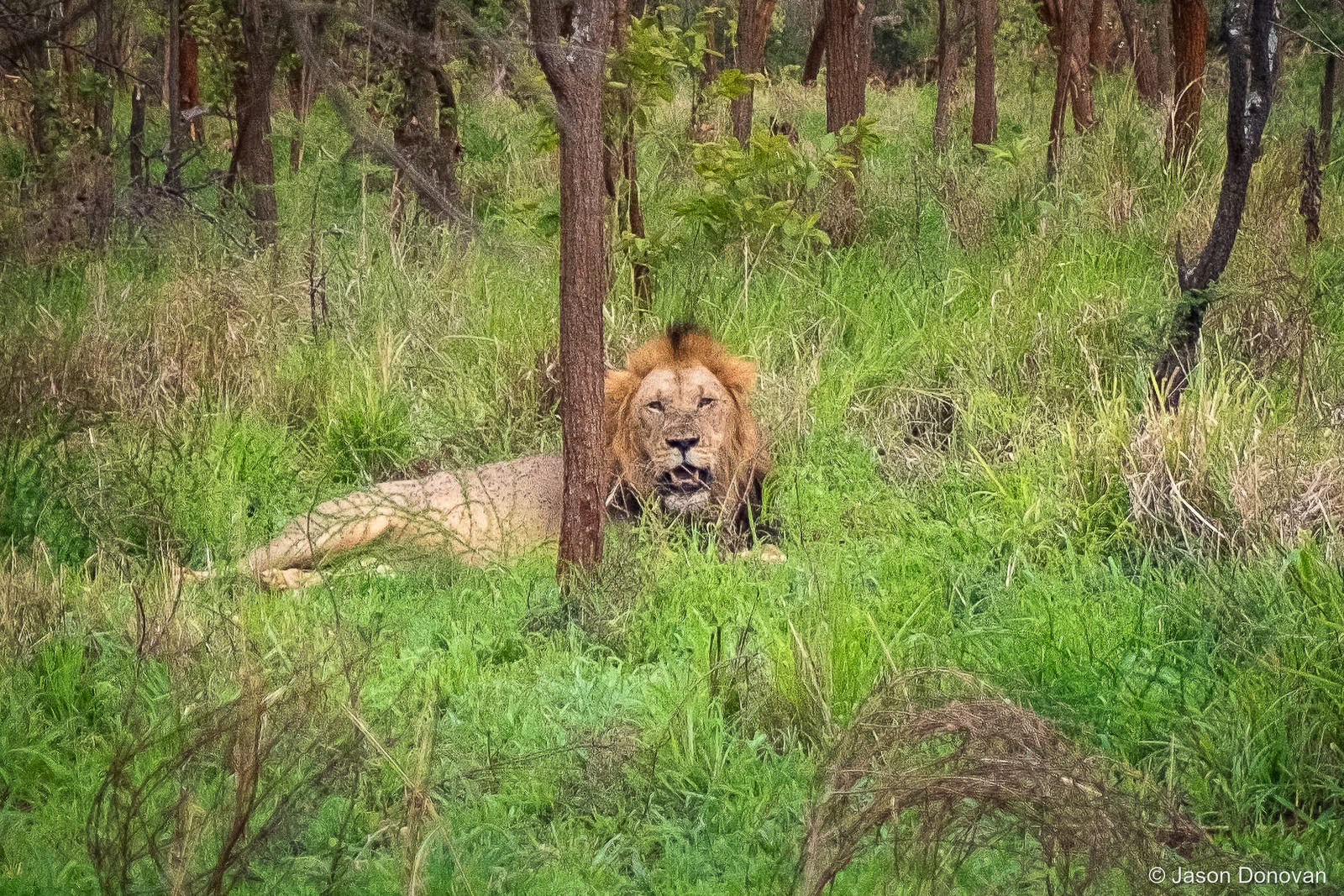
The lions are most often found around the central lake system, and on a still morning you will hear them before you see them. They spend much of the day lying in long grass, which is the main photographic problem: grass in front of the face. Take your time. A small change in the vehicle's position, or waiting for a lion to lift its head, makes the photograph.
Use a single focus point on the eye, shoot at the lion's eye level where the track allows, and stay with them towards sunset, when they become active.
Elephant
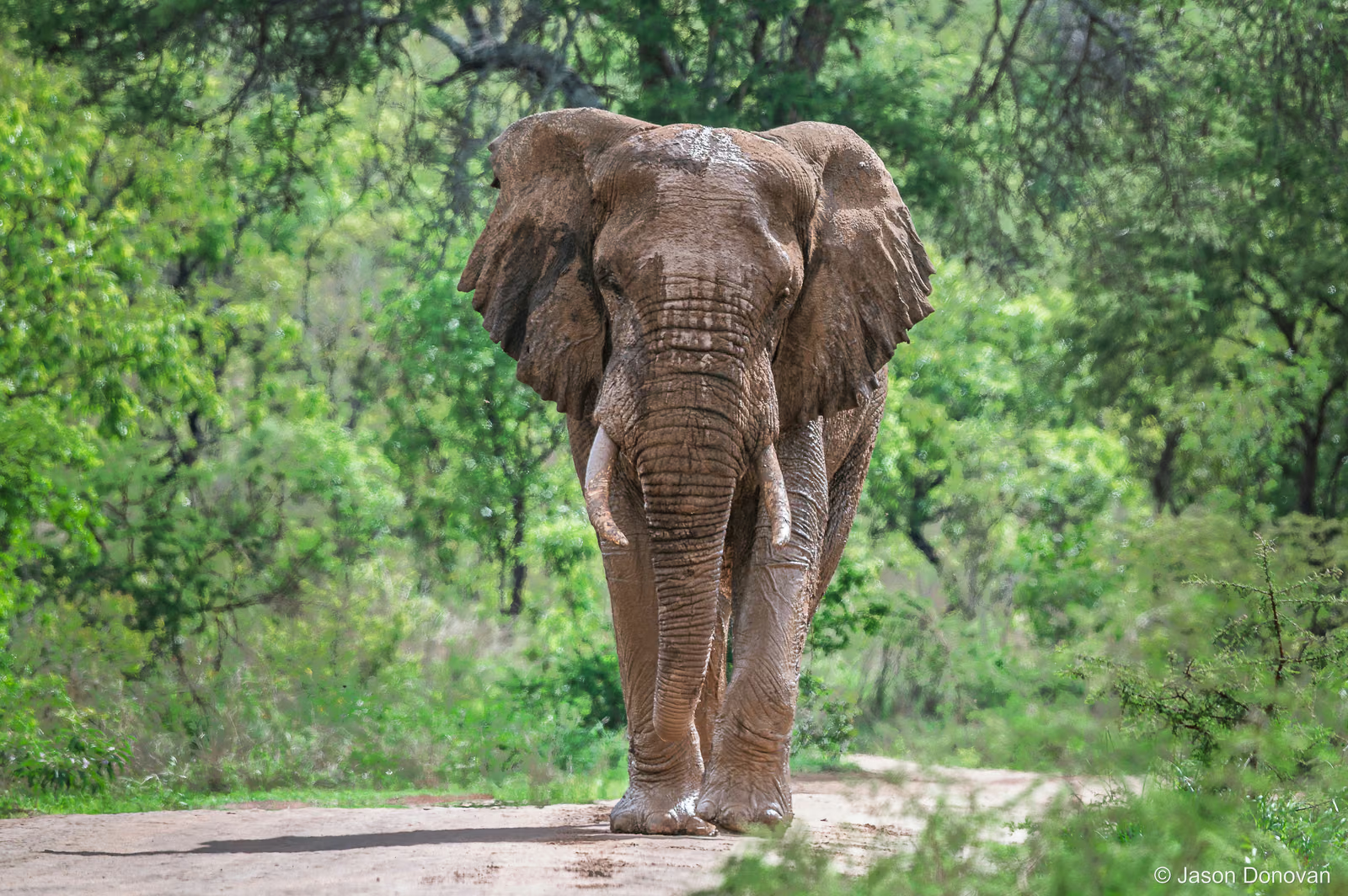
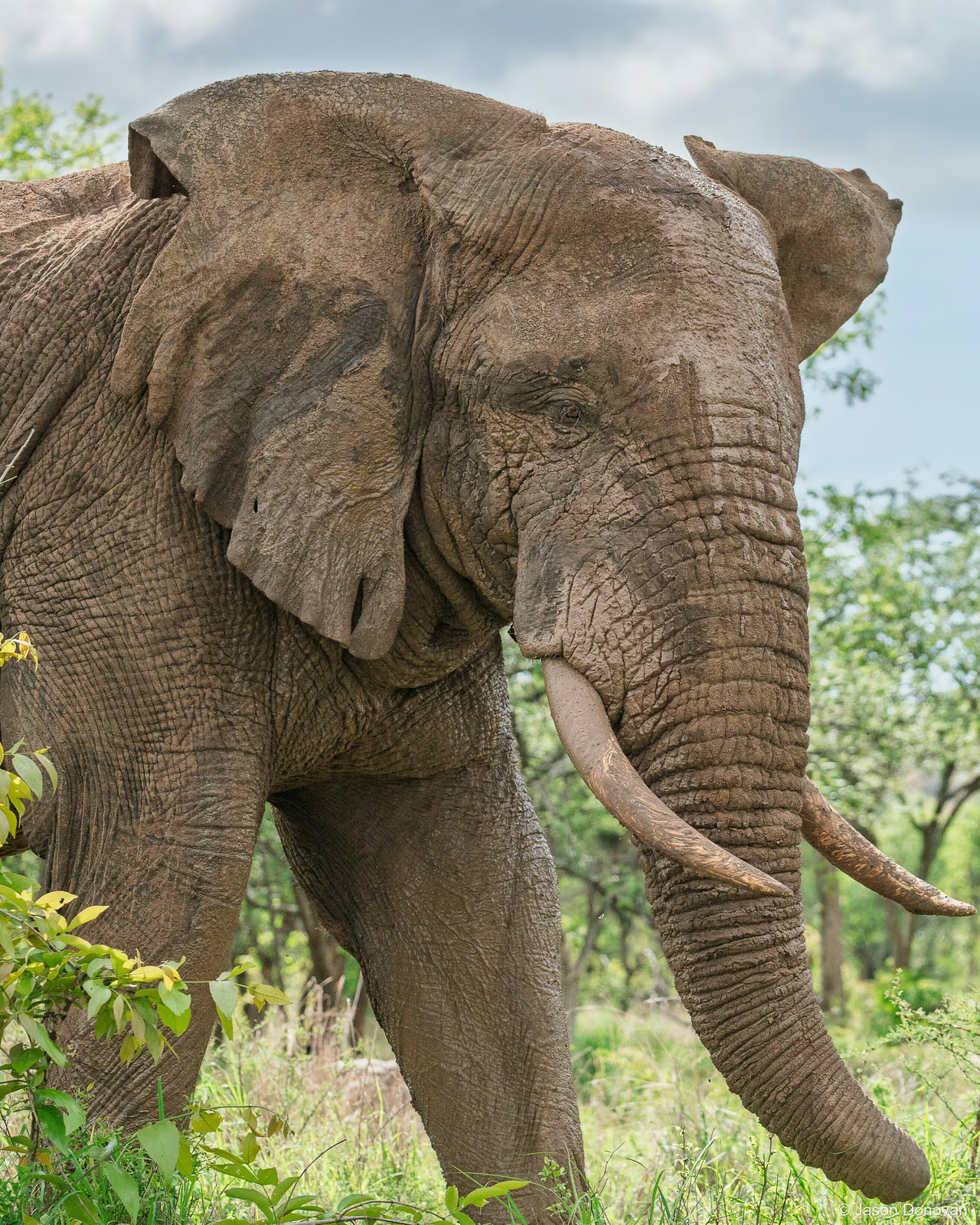
Elephants move through the woodland and come down to the lakes to drink. Bulls often walk the tracks themselves, which gives the classic photograph of an elephant coming straight towards the vehicle, with a red track leading the eye.
Give them space and let them come to you. Watch the ears and the trunk: a relaxed elephant is easy to read, and a nervous one will tell you clearly. A shorter lens on a second body is useful here, because an elephant can fill a 400mm frame from 30 metres away.
Buffalo
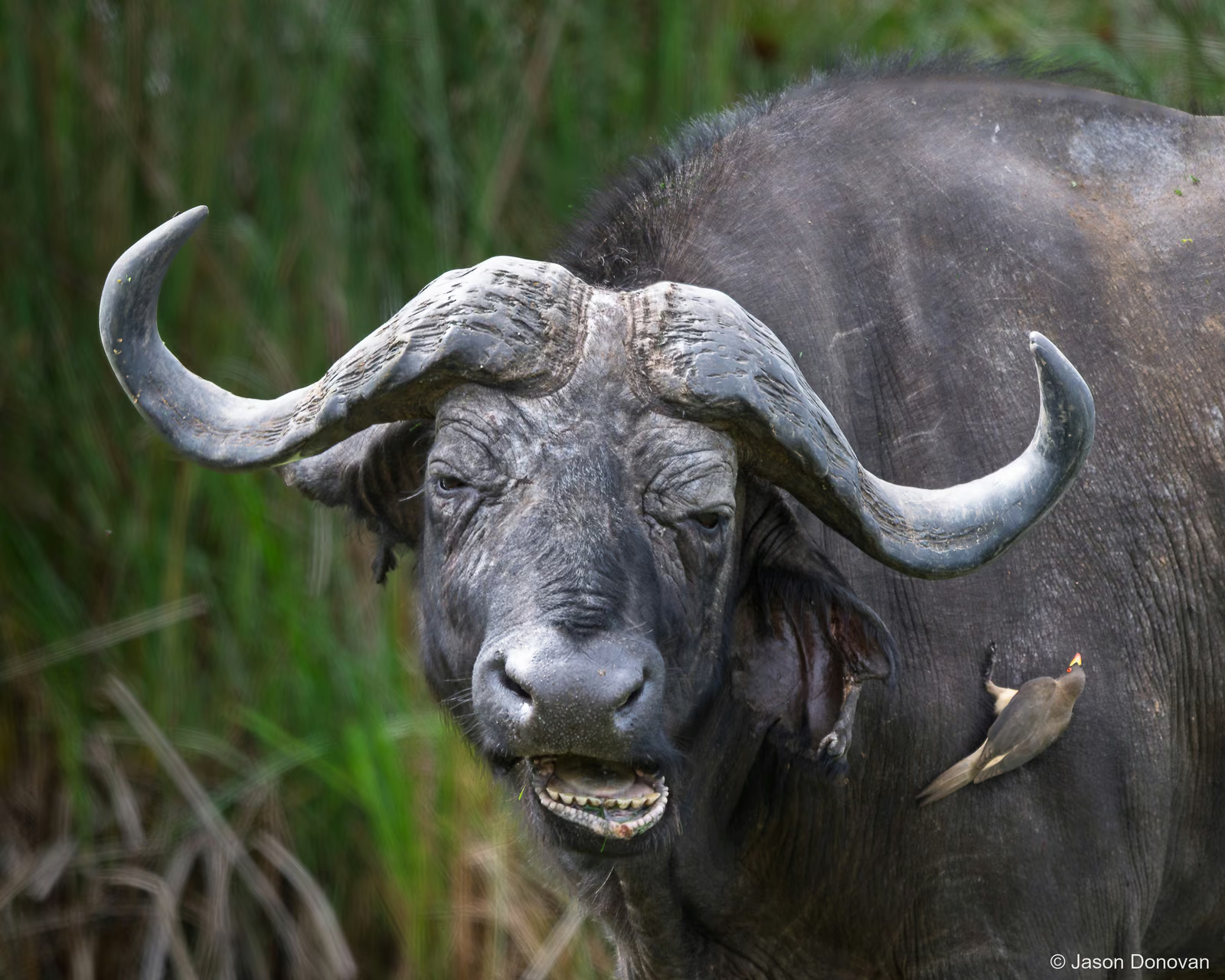
Buffalo are found in herds near water and in the swampy ground along the lakes, and as single old males resting in the grass. They are among the most photogenic animals in the park: heavy horns, a direct stare, and often oxpeckers or egrets riding on their backs.
Their dark coats need care with exposure. Dial in negative exposure compensation when a buffalo fills the frame, and watch for the light catching the horns.
Rhino
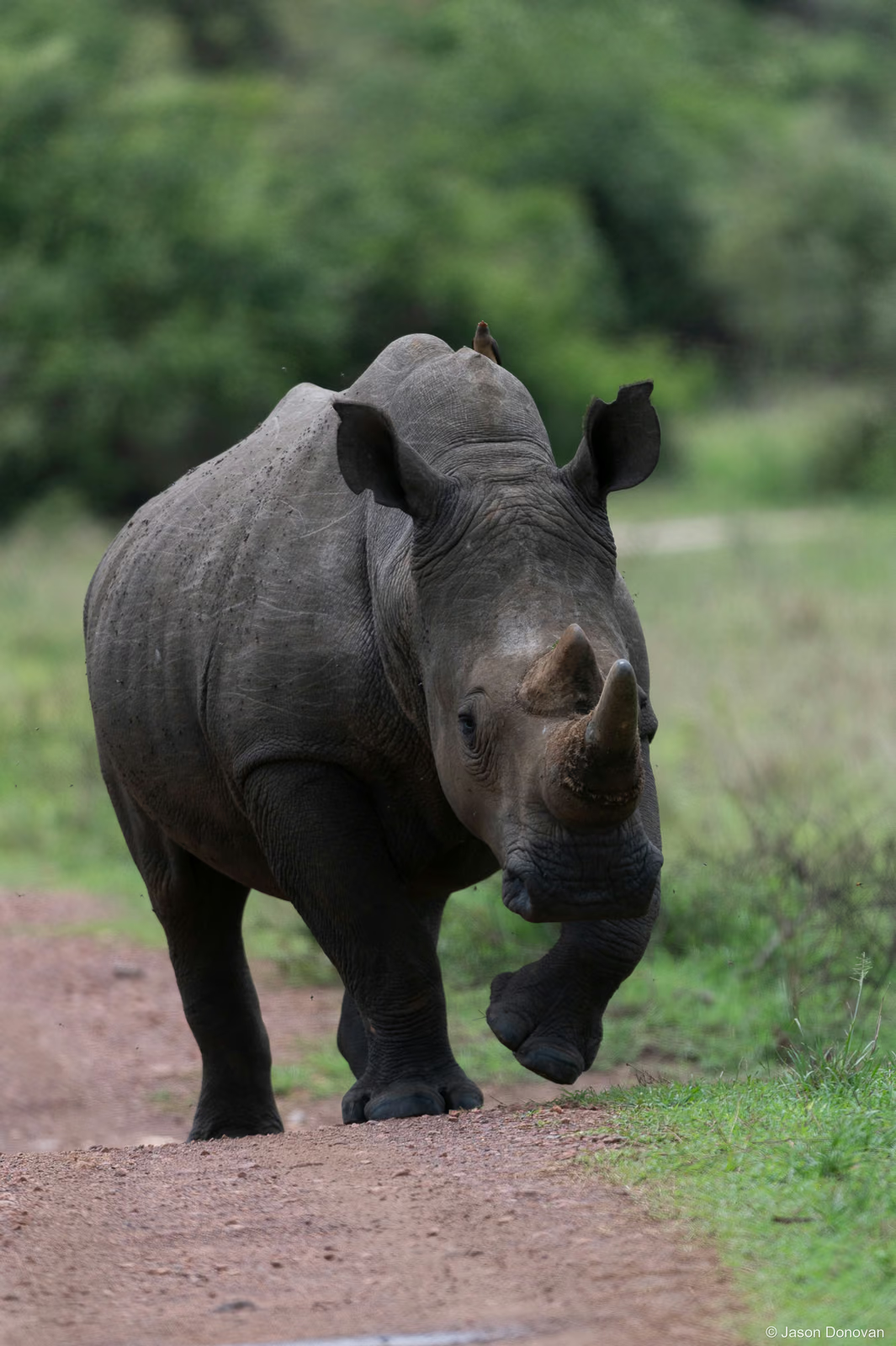
Akagera holds both species. White rhinos are grazers of open grassland and are often seen in small groups, sometimes on the tracks themselves. Black rhinos are browsers, more solitary, and keep to thicker bush, so sightings are fewer and often brief.
For white rhinos, get low and wait for the heads to lift from grazing. For black rhinos, be ready before the vehicle stops: settings fixed, lens out, and a fast shutter speed in case it moves off.
Leopard
Leopards live in Akagera but are rarely seen, and I would not plan a trip around photographing one. Most sightings are brief, around dawn and dusk, in the woodland. If one appears, raise the ISO without hesitation: a sharp, slightly noisy leopard is far better than a blurred one.
Beyond the Big Five
Some of the best photographs in Akagera are of animals outside the five: giraffes against the hills, zebra, topi and waterbuck, hippos and crocodiles on Lake Ihema, and raptors such as the martial eagle and African fish eagle. The boat safari on Lake Ihema is where many guests take their favourite photographs of the trip.
I recommend two to three nights in Akagera to see and photograph the park properly.
Photograph the Big Five in Rwanda
Akagera is on three of our tours, from a three-day safari from Kigali to the full 13-day itinerary.